
Mortal Wisdom and
the False Teacher
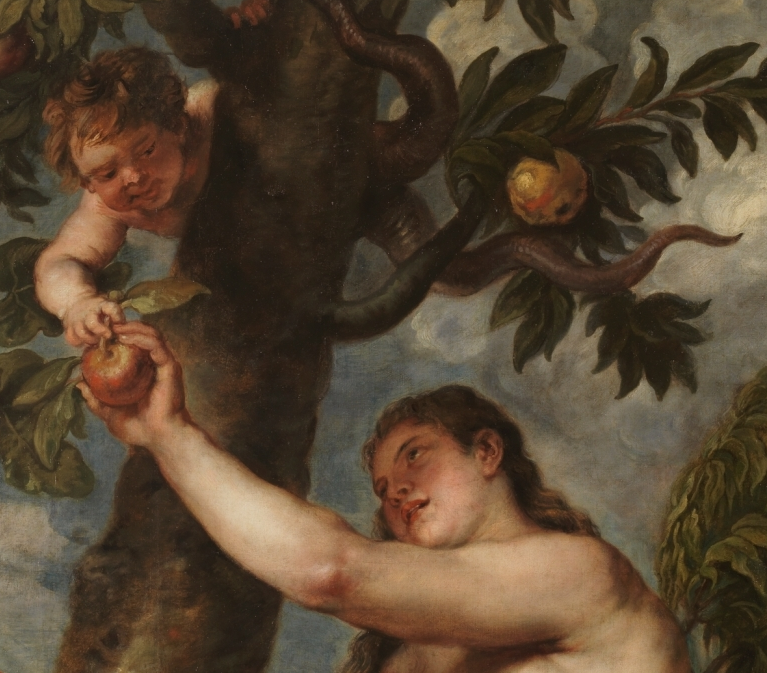
[Image: “Adam and Eve”, Peter Paul Rubens (c. 1628-1629)]
As this pedagogical story proceeds, the narrative depicts what happens when the mortal’s wisdom becomes corrupted by listening to the false teaching of earthly wisdom (Genesis 3:1-6):
Now the serpent was more crafty (arum) than any of the wild animals the Lord God had made. He said to the woman, “Did God really say, ‘You must not eat from any tree in the garden’?”
The woman said to the serpent, “We may eat fruit from the trees in the garden, but God did say, ‘You must not eat fruit from the tree that is in the middle of the garden, and you must not touch it, or you will die.’”
“You will not certainly die,” the serpent said to the woman. “For God knows that on the day you eat from it your eyes will be opened, and you will be like God, knowing good and evil.”
When the woman saw that the fruit of the tree was good for food and pleasing to the eye, and also desirable for gaining wisdom, she took some and ate it. She also gave some to her husband, who was with her, and he ate it.
In an earlier section, “Sacred Trees of Eden,” it was explained that the Tree of Knowledge of Good and Evil was a theological symbol that represents the heavenly wisdom that comes from God. This special tree in the center of Eden’s sacred space had a double meaning that the ancient Mesopotamian would have associated with the ĝiš-hur (gish-hur).
The ĝiš-hur represented the divine statutes and decrees in the plan of God. They were ancient and holy rules for living that enabled and protected civilized life [ĝiš-hur, page 104; ME, page 130].
But ĝiš-hur can also mean “everlasting tree”:
ĝiš-hur = “everlasting tree”
The ancient hearer from this oral culture would have recognized the wordplay being used here. This everlasting tree (ĝiš-hur) of “Knowledge of Good and Evil” in the garden of Eden represents God’s statutes of divine wisdom. And when God placed the mortal into sacred space to fulfill their priestly work, he warned:
“The Lord God commanded the man (ha-adam, ”the mortal”), saying, ‘From any tree of the garden you may freely eat; but from the tree of the knowledge of good and evil you shall not eat, for on the day that you eat from it you will certainly die.’” (Genesis 2:16-17)
The “Apple”
It should be noted that in the Western tradition the fruit the serpent offers the woman has frequently been depicted as an apple. Interestingly, the Sumerian word for “apple” happens to be hašhur.
The words ĝiš-hur and hašhur are near-homophones, close enough that the ancient Mesopotamian hearer would notice the wordplay. That same hearer would also recognize that haš-hur carries three other meanings that reveal the disastrous consequences of taking this fruit:
hašhur = “apple”
haš-hur = “to forever divert water”
haš-hur = “to forever break off”
haš-hur = “everlasting debt-slavery”
So the ancient hearer would recognize that the cunning serpent was offering more than just an attractive piece of fruit. The wordplay reveals that the serpent’s manipulative half-truths were diverting the “water of life” of God’s wisdom. For this reason the serpent is portrayed as the false teacher. The story shows how he cuts off twigs and branches from God’s tree (ĝiš-hur = everlasting tree/divine statutes) and offers them as “wisdom”.
This is the true symbolism and danger of the “apple” taken from the Tree of Knowledge of Good and Evil. Those who eat this fruit become bound in eternal debt-slavery to the Father of Lies.

The Crafty Serpent
The ancient listener would have also recognized that the serpent was a dangerous false teacher because he is “crafty” (arum). The word arum had multiple meanings in Sumerian that reveal the true identity of the serpent and its goal.
First, the serpent presents itself as a wise old woman (where “woman” is a personification of wisdom) who claims to be equal in rank to God the Father:
a-ru₃-um = "‘wise’ old woman (who claims) to be equal to the father”
ru₃ = to equal in size or rank [rù, page 14]
It is notable that the serpent has been depicted as a woman — and the fruit of the Tree of Knowledge of Good and Evil as an apple — in some of the most significant artwork of the West. This may be a further indication that Sumerian’s influence on ancient knowledge continued to shape the understanding of the Adam and Eve story centuries after Latin became the lingua franca of scholarship.
[Images: “The Temptation and the Expulsion”, Michelangelo (c. 1509-1510), and “Temptation of Adam and Eve”, Raphael (c. 1508-1511)]
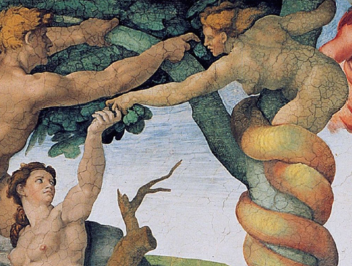
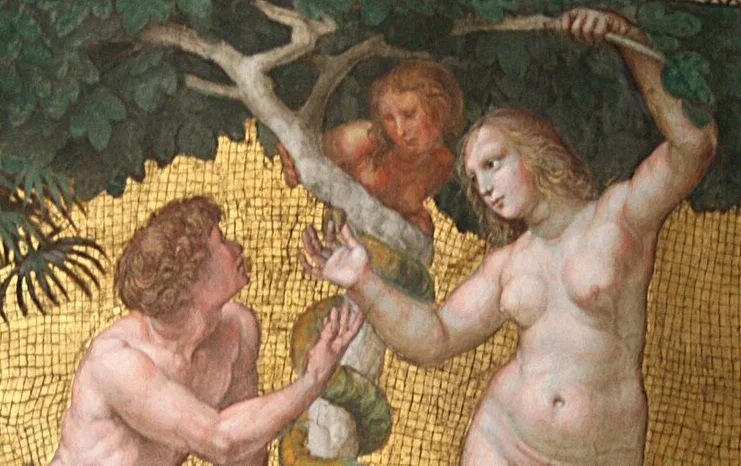
This word arum, frequently translated as “crafty” or “cunning,” is associated with wisdom. In this case, the serpent is using its wisdom to trick and manipulate the mortal’s wisdom-wife. Why? Because it considers itself God’s equal and therefore seeks to replace God and destroy God’s beloved mortal.
This is why the serpent speaks to the woman and not the man. The woman represents the mortal’s wisdom; the mortal listens to and follows their own wisdom. The question the story asks is, “Who will the mortal’s wisdom listen to… God or the false teacher?”
The additional meanings of arum expose the serpent’s strategy:
a-ru-um = “skillful teacher who removes the water”
a-ru-um = “old woman who replaces the father”
ar₂-u₃-um = “skillful teacher who offers praise and admiration”
ar₂,₃-u₂,₃,₄,₈-um = “skillful teacher who disputes to destroy”
The serpent speaks as a wise and knowledgeable teacher, but its goal is to usurp God’s authority and take the “water of life” away from the mortal by deceiving its wisdom-wife. This is why the treacherous serpent offers false praise when it tells the woman she can be God’s equal: “You can be like God, knowing good and evil” (Gen 3:5b). In other words, mortal wisdom is told that it can decide for itself what is good and evil rather than deferring to the wisdom of God.
Through this wordplay the ancient listener would understand that the false teacher seizes sacred space by replacing heavenly wisdom with earthly wisdom.
The serpent does this by misrepresenting what God said. Whereas God only forbade the mortal from eating the fruit of one tree - the Tree of Knowledge of Good and Evil — the serpent insinuates that God has forbidden eating from any tree in the garden. So, the serpent distorts God’s generous nature and implies he is stingy instead.
Sadly, the woman (representing the mortal’s wisdom) begins to misrepresent God’s words as well, just like her “skillful teacher”. She adds to God’s words, falsely stating that even touching the tree in the middle of the garden will cause a person to die. The serpent then contradicts God’s warning that the mortal would “die” on the very day they eat the forbidden fruit (Genesis 2:16-17).
The “Satan”
When God warned against eating the fruit, the “death” he spoke of refers to broken relationship with God in this life and the afterlife. This takes place at the moment we sin against God by following earthly wisdom instead of God’s wisdom.
In contrast, when the serpent claimed the mortal would not die on the day they eat the fruit, the serpent is only referring to biological death. In this way it can duplicitously yet truthfully claim that the mortal will not die biologically on the day they grasp for equality with God. What the serpent does not say is that their relationship with God will “die” on the day they reject God’s wisdom, just as God warned.
Moreover, the serpent’s wisdom actually tempts its victim to become a “satan” — one who seizes equality with the God of heaven:
sa₂-ta-An = “(one who) seizes equality with the God of heaven”
As the wisdom-wife listens to the false teacher, she abandons the water of life, breaks off branches from God’s tree of wisdom, and begins speaking falsely. In doing so, she is no longer associated with Lady Wisdom; she has become foolish. The woman who was meant to be the mortal’s guide will now lead it astray into the way of “death” — relational separation from God.
The serpent and the mortal’s wisdom-wife offer half-truths from God’s words once she listens to the false teacher (Genesis 2:16-17; 3:1-5). They are offering twigs and cuttings from God’s Tree of Wisdom, but this false wisdom leads to relational death and separation from God.
This is very similar to when the devil offered Jesus half-truths from Scripture in the wilderness: right-sounding falsehoods meant to lead the foolish astray (Matthew 4:1-11). But with each temptation of manipulated Scripture, Jesus responded by providing the fuller scriptural context of the wisdom of God.
The Bible warns that mortals who allow their wisdom to be tricked by the false teaching of earthly wisdom will end up following Lady Foolishness into the grave (Proverbs 9:13-18).
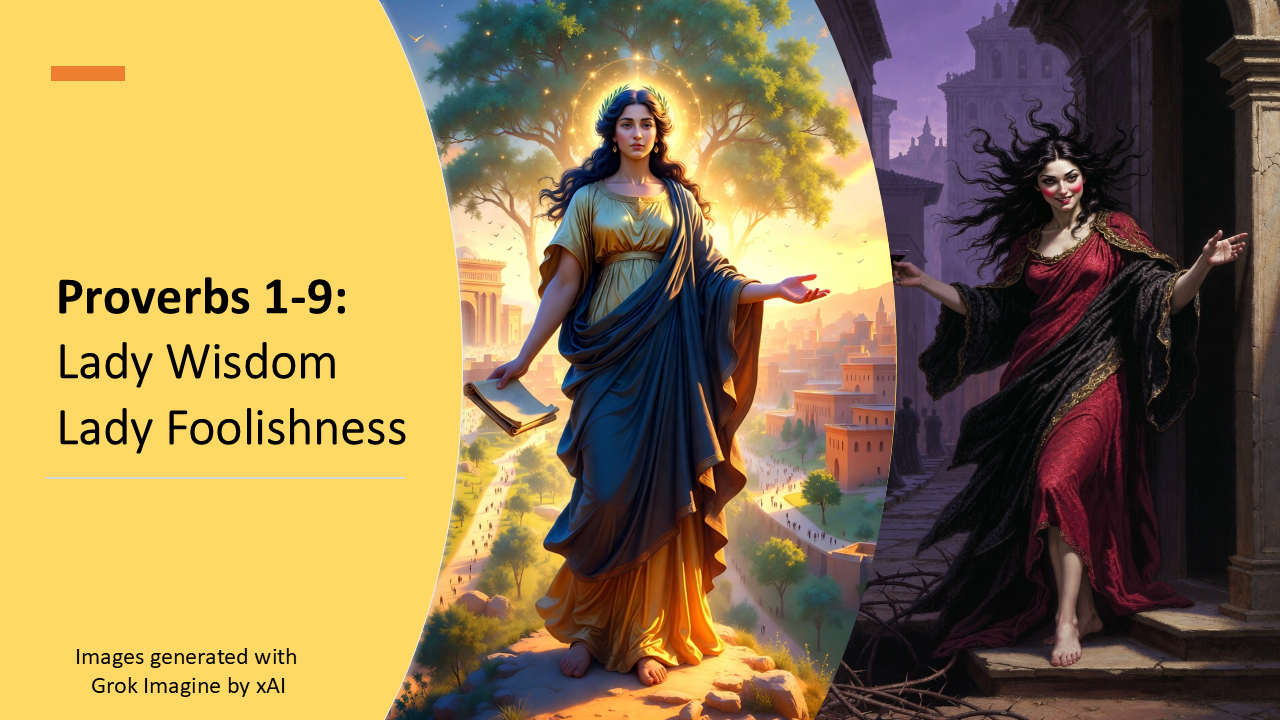
This is why the mortal’s wisdom-wife in Genesis 2 is presented like Lady Wisdom who listens to the heavenly wisdom of God. This wisdom leads to right relationship with God — “Life” in both this life and the afterlife.
But the wisdom-wife in Genesis 3 is like Lady Foolishness who listens to false teachers like the serpent and leads mortals astray. Her earthly wisdom leads to relational separation from God — “Death” in both this life and the afterlife.
In Genesis 2-3 of this pedagogical story, every person is asked: “Whose wisdom will you listen to: the wisdom of God or earthly wisdom?”
Previous: “The Rib, Mortality, and Eternal Life”