
The “adam” as an Archetype of Humanity
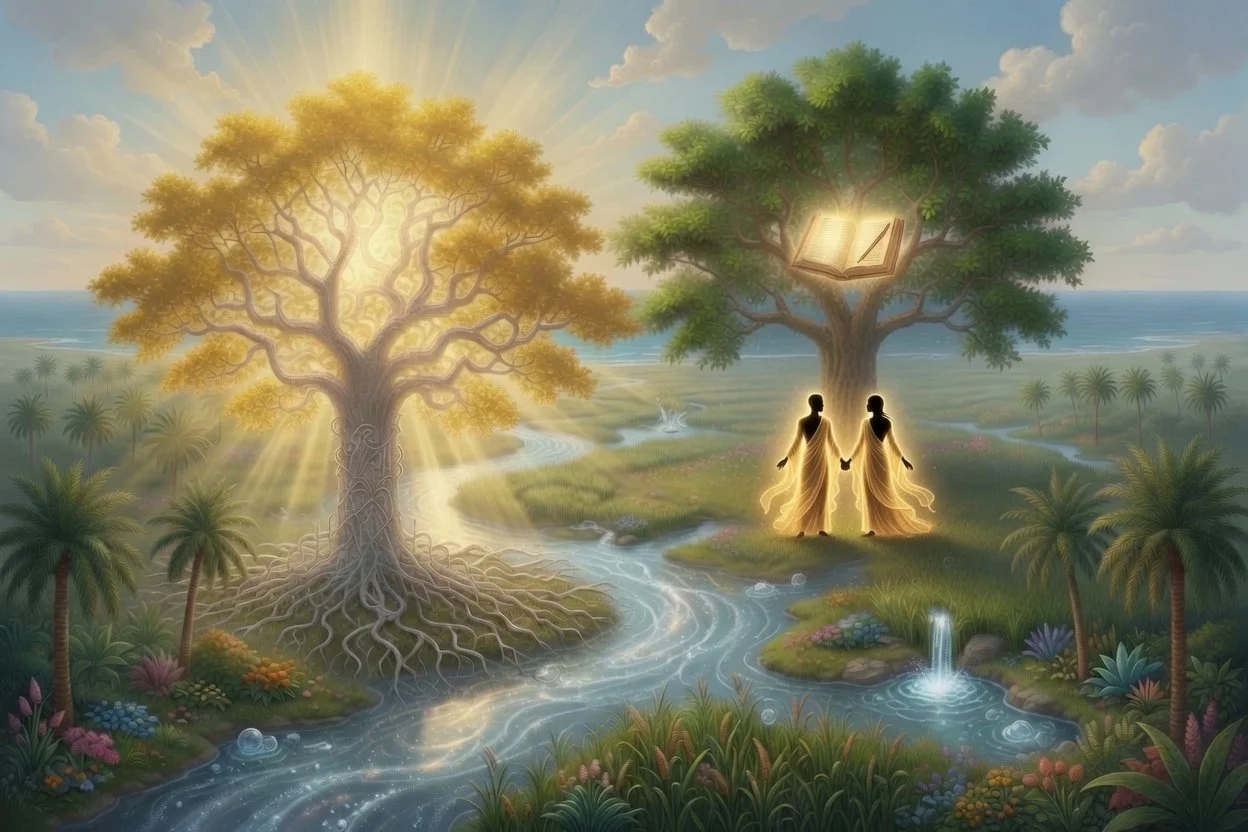
In his video, “The Lost World of Adam and Eve,” Old Testament scholar John Walton describes Genesis 2 as the sequel to Genesis 1. He discusses the human’s mortality and priestly role in sacred space as well as the significance of the woman God gives as a helper. What follows here builds on his work.
In Genesis 1:26-27, God made men and women in his image and entrusted the earth and its creatures into their care. Like the priestly roles of Aaron and his sons in the Tabernacle of Moses, human beings — male and female — are given priestly stewardship of the Cosmic Temple. The text says:
“Then God said, ‘Let us make adam (humans) in our image, in our likeness, so that they may rule over the fish in the sea and the birds in the sky, over the livestock and all the wild animals, and over all the creatures that move along the ground.’
“So God created ha-adam (the human) in his own image, in the image of God he created them; male and female he created them.” (Genesis 1:26-27)
The translation of the Hebrew noun adam as “humans” and ha-adam as “the human” is appropriate because it captures the detail that both men and women belong to this category of adam.
However, Sumerian linguistics help clarify that “adam” actually has four important meanings which are used in the text and this wordplay would help listeners recall details in this oral teaching tradition:
ad₃,₆,₇-am₃ = “to be mortal (a corpse)”, [Genesis 1:26-28; 2:7-23]
ad₂-am₃ = “to be driven away”, [Genesis 3:23-24]
ad₅-am₂ = “to pay out in thorns”, [Genesis 3:17-18]
ad-am₃ = “to be a father”, [Genesis 4:1-2, 25]
So the first meaning of ad₃,₆,₇-am₃ , “to be mortal” — or more literally “to be a corpse” — appears to be a better word choice than “human” because 1) it fits the context where the immortal Elohim (God and the heavenly host) create mortals in their image, and 2) it also applies to both men and women.
In other words, Genesis 1:26-27 could accurately be translated as:
“Then God said, ‘Let us make mortals (adam) in our image, in our likeness, so that they may rule over the fish in the sea and the birds in the sky, over the livestock and all the wild animals, and over all the creatures that move along the ground.’
“So God created the mortal (ha-adam) in his own image, in the image of God he created them; male and female he created them.”
It is helpful to point out, as John Walton does in his video “The Lost World of Adam and Eve”, that “adam” is used as an archetype of humanity in the Genesis 1—3 narrative.
In Genesis 2, all mortals (ad₃,₆,₇-am₃ = “to be mortal”) are welcomed into sacred space and offered the wisdom of God.
In Genesis 3, those who seek equality with God and embrace the wisdom of false teachers will be driven out of sacred space (ad₂-am₃ = “to be driven away”) and paid out in thorns (ad₅-am₂ = “to pay out in thorns”).
This strongly suggests that adam is not used as the proper name Adam (ad-am₃ = “to be a father”) until Genesis 4 where it identifies the historical father who taught this pedagogical story to his sons, Cain, Abel, and Seth.
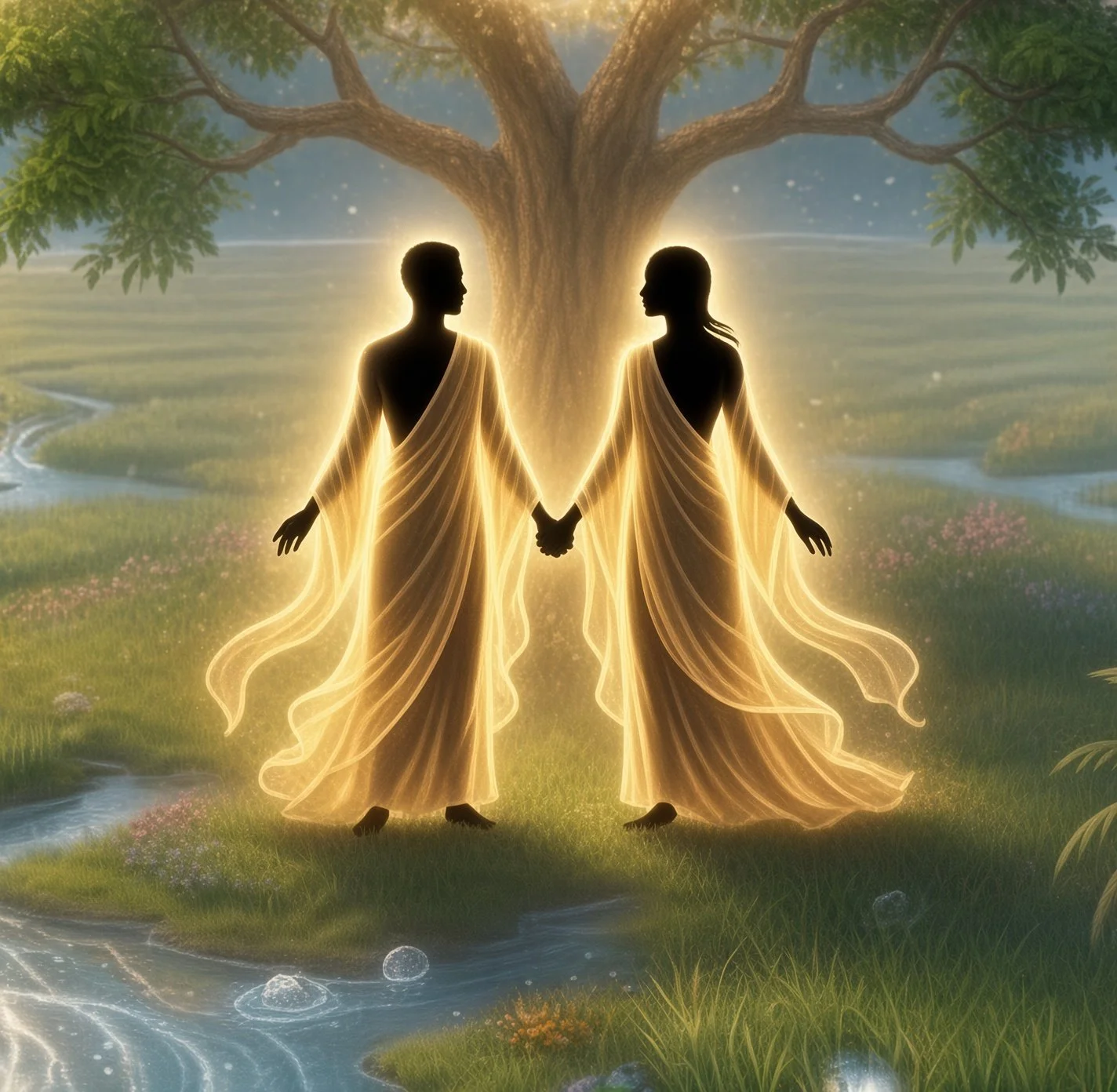
It should be noted that these singular and plural terms ha-adam/adam (“the mortal”/“mortals”) have a gender-neutral meaning that applies to both biological sexes, but must be considered grammatically masculine in Hebrew since it refers to a mixed group of men and women. So when ha-adam has been translated as “the man”, that word choice has inadvertently implied that maleness is associated with this pedagogical character whereas it actually refers to both male and female mortals. The creation of the mortal — ha-adam — from the dust of the ground in Genesis 2:7 before any sin is committed is another indication that the mortal’s limited lifespan is an intended part of God’s “very good” creation:
“Then the LORD God formed the mortal (ha-adam) from the dust of the ground and breathed the breath of life into his nostrils, and the corpse (ha-adam) became a living being.”
Walton discusses dust as a symbol of mortality in the ancient world and Scripture also associates dust with death in passages like Psalm 22:15:
“My mouth is dried up like a potsherd, and my tongue sticks to the roof of my mouth;
you lay me in the dust of death.”
According to Sumerologist John Halloran, the Sumerian idiom — saḥar(-da)...gi₄ — meaning “to turn into dust” from ('dust' + 'to turn, return'), was a euphemism for “to die” [page 136].
In Genesis 3:19, God uses this same euphemism when he tells mortals:
“By the sweat of your brow you will eat your food until you return to the ground,
since from it you were taken; for dust you are and to dust you will return.”
Previous: “And God Said, ‘It is Good’”